
Smart Fortwo Spark Plug Replacement — 451 and 453
Service interval: ~30,000 mi (M132 NA / Brabus, both 451 and 453 H4Bt) · Inspect at every other oil change
Tools you'll need
- 5/8" or 16mm spark plug socket with rubber insert
- 3/8" ratchet and short extension
- Torque wrench (0-30 Nm range)
- Spark plug gap tool (only if plugs aren't pre-gapped)
- Dielectric grease or anti-seize (very thin film on the threads only if your plug isn't pre-coated)
- 10mm socket for valve cover bolts (453)
- Clean rag to keep debris out of the plug wells
What this is and why it matters
Spark plugs in a Smart take more abuse than they should. Both the M132 in the 451 and the H4Bt turbo in the 453 are small displacement engines running high specific output, and the plugs see a lot of cycles per mile. When they wear out you get random misfires, rough idle, and lit P0300-series codes. Replacing them on schedule is cheaper than chasing a misfire after the fact.
The 451 is a straightforward job — engine cover off, plugs sit in clear wells. The 453 is the tight one: the H4Bt's plugs live under the valve cover and the cover comes off to access them. Plan accordingly. The CDI diesel doesn't have spark plugs at all (it has glow plugs, which is a different procedure), so this guide doesn't cover that.
What you'll need
Listed in the tools section above. A few specifics:
- The spark plug socket needs the rubber insert so the plug stays seated when you lift it out of a deep well.
- If you're working on the 453, have a fresh valve cover gasket on hand in case the old one tears coming off. They often do.
- Don't slather anti-seize. Modern iridium plugs come with plated threads designed to seat dry. A heavy coat of anti-seize changes the torque reading and can over-stress the threads.
Step by step
451 (M132 petrol — NA and Brabus)
- Engine cool, please. Pulling plugs out of an aluminium head while it's hot is how threads end up in the socket instead of the head. Wait at least an hour after a drive.
- Open the rear hatch and remove the plastic engine cover. Twist the fasteners or pop them off depending on your year.
- Pull the coil pack connectors and the coils. Each coil sits on top of its plug. Note which connector goes where if your harness isn't keyed.
- Vacuum or blow out the plug wells. Anything that falls in here goes into the cylinder when the plug comes out. Take the time.
- Crack each plug loose, then back out by hand. If a plug fights you on the way out, stop, let it cool more, and try again. Forcing it strips the head.
- Gap-check the new plugs. NGK iridiums come pre-gapped at 0.7-0.8mm for the M132. Most won't need adjustment, but eyeball them.
- Thread the new plugs in by hand. Always start by hand. If the plug doesn't spin in freely for at least three full turns by fingers alone, back it out — you're cross-threading.
- Torque to spec. Workshop manual is the source of truth; ~22-28 Nm is the typical M132 range. A torque wrench is non-optional here.
- Reinstall coils and connectors. Replace engine cover. Done.
453 (H4Bt 0.9L turbo)
The 453 plugs live under the plastic valve cover, not under a separate cover plate. Access is tighter than the 451.
- Engine cool. Cover off the engine bay.
- Remove the ignition coils and harness. The coils thread into the cover; pull them straight up.
- Unbolt the valve cover. 10mm bolts in the sequence the workshop manual specifies. Lift the cover straight off.
- Plugs are now visible in the head. Vacuum the wells before pulling anything out.
- Loosen each plug, back it out by hand. Same care as on the 451.
- Install new plugs hand-tight first, then torque to spec. Renault spec for the H4Bt; verify your year's torque value in the workshop manual.
- Reseat the valve cover with a fresh gasket if the old one is hard, glazed, or torn. Torque cover bolts in sequence.
- Coils back on, harness back on, engine cover back on. Start it, listen for any new ticks, and check for oil seepage at the cover.
Common gotchas
- The 453 valve cover gasket often won't reuse. Have a new one ready. A weeping cover puts oil in the plug wells and that's how P0303 with oil-fouled plugs happens — there's a dedicated fault code page on this site for exactly that scenario.
- Cross-threading the M132 head is a real risk. Aluminium head, steel plug. If a plug doesn't spin in cleanly by hand, it's not going to spin in cleanly with a ratchet either. Stop and reseat.
- Don't reuse plugs. Even if they look fine, the gap has opened from wear. Old plugs back in are a false economy.
- Use the right plug. A copper plug in place of the iridium will run for a few thousand miles and then start misfiring under load. Stick with the OEM heat range.
- CDI owners — these are not your plugs. The 451 CDI uses glow plugs that pre-heat the cylinder for cold starts on diesel. Glow plug replacement is a different procedure.
- One plug at a time on the 451 helps if your harness isn't labeled. Don't pull all four (or three) coils at once unless you're sure of the firing order.
When to skip DIY
The 451 is a confident-DIY job for anyone with a torque wrench. The 453 is the borderline one — if you've never had a valve cover off a car, the gasket reseal and the cover bolt sequence are real failure points. Get one wrong and you've turned a $40 job into an oil leak. If you're not comfortable with that, take it to a Smart-experienced shop. Expect $150-250 for plugs and labour on the 453, less on the 451.
Parts & typical prices
| Part | Typical price | Search |
|---|---|---|
| NGK Iridium IZFR6K11 (451 M132 NA / Brabus) | $8-14 each | Search Google |
| NGK ILKAR8H6 or equivalent Renault-spec (453 H4Bt) | $10-18 each | Search Google |
| Valve cover gasket (453, if you tear it on removal) | $25-45 | Search Google |
Prices are rough community-reported ranges, not quotes. Aftermarket vs. genuine Mercedes parts swing the spread.
Manual references
- Browse Smart workshop manuals on smartcarmanuals.com — model-specific reference manuals on the home page; pick your chassis code section for torque specs and detailed procedures.
How-to videos
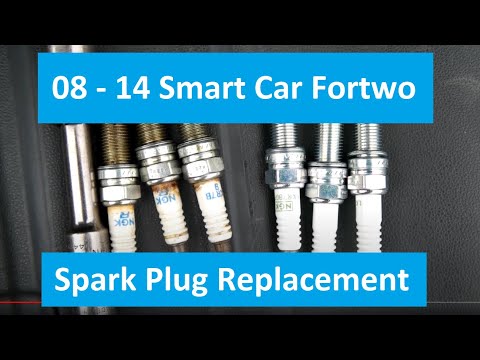


Related fault codes
- P0301 Cylinder 1 Misfire on Smart Fortwo 451 / 453
- P0302 Cylinder 2 Misfire on Smart Fortwo 451 / 453
- P0303 Cylinder 3 Misfire on Smart Fortwo 451
- P0303 Cylinder 3 Misfire on Smart Fortwo 453 (Valve Cover Gasket Oil Leak)
- P0300 Random / Multiple Cylinder Misfire on Smart Fortwo 451 / 453